|
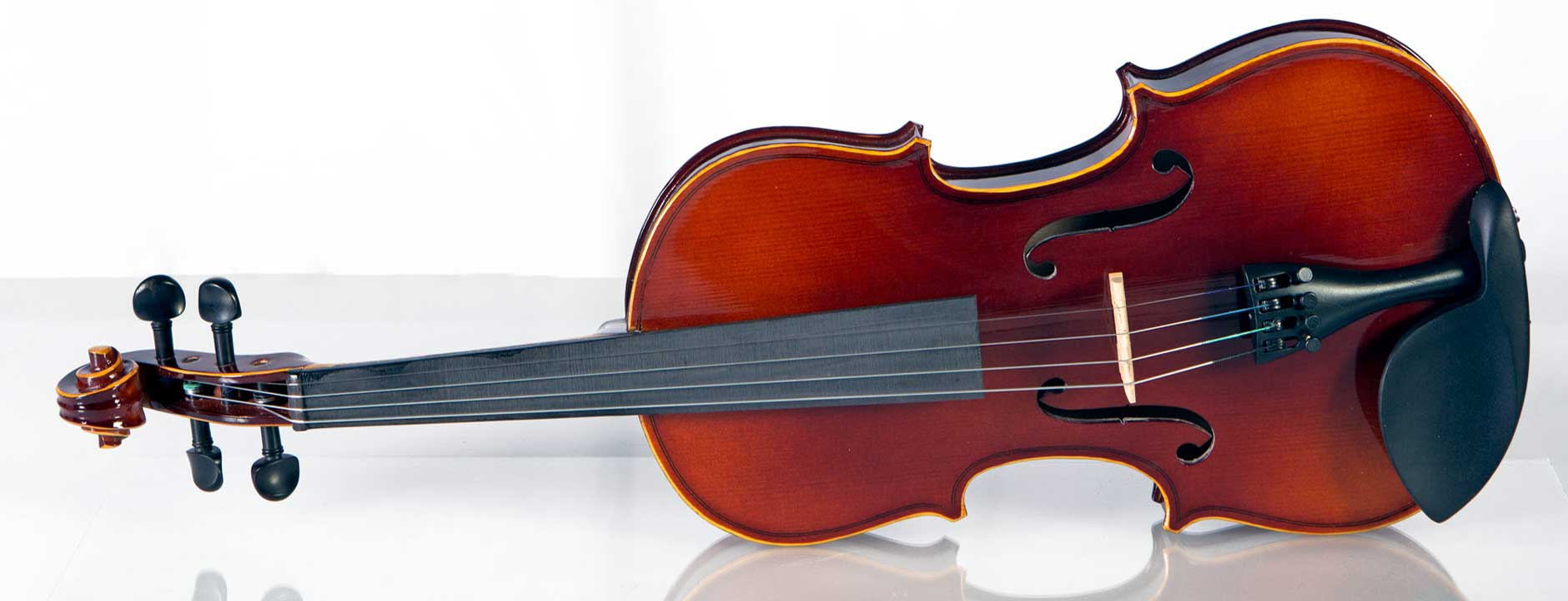
Here are a couple ways to tune short scale-length guitars with regular 9 or 10 gauge strings:
1/2 size guitars should be tuned up to:
G-C-F-Bb-D-C or G-D-G-B-D-G (Open G Tuning)
1/4 size guitars should be tuned up to:
A-D-G-C-E-A or G-D-G-B-D-G (Open G Tuning)
read more for a full explanation
|
|
Read more...
|
|
|
I found this neat little guitar tuning tool on the web and the person who made is kind enough to let others put it on their website. It's not as goot as having an electronic guitar tuner like this one but it works in a pinch.
|
|
Read more...
|
|
|
To adjust the truss rod, use the hex wrench supplied with your instrument.
If neck is too concave (Figure A) turn the truss rod nut clock-wise.
If neck is too convex, (Figure B) turn the truss rod nut counter clock-wise.
Check your tuning, then re-check the gap with the feeler gauge.
|
|
Read more...
|
|
|
SETUP AND ADJUSTMENT MADE EASY
Weather, speciflcally temperature and humidity, may have a dramatic impact on the way your instrument plays. All instrument woods expand and contract with seasonal Auctuations in temperature and humidity, and naturally, string height and playing action are affected. Depending on the climate where you live, your instrument may need routine adjustments a few times a year. Fender®/Squier®/Olympia™ instruments have several points of adjustment which are there to control the effects of these environmental changes, and more impor tantly, these features allow you to tailor the action of the instrument to your own personal playing style.
|
|
Read more...
|
|
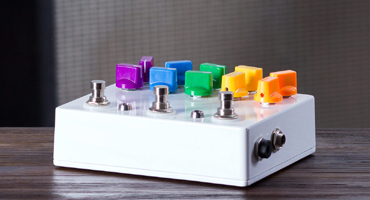
Easy Distortion settings
It is fairly easy to achieve a distorted sound from most guitar
amplifiers. If your amplifier has separate gain and volume controls, it
should be quite simple. Make sure your guitar is plugged into the amp
and the volume on the guitar is at 100%. Turn the volume control on the amp all
the way down, turn the gain control up to 75%, then turn the volume
control up until you achieve the desired volume level.
|
|
Read more...
|
|
|
A good 2kool4skool customer, Paul Houser, did a very cool mod on one of our electric guitars.
Here's a quick run through with pictures..
|
|
Read more...
|
|
|
instructions for blues sound
|
|
Read more...
|
|
Below is a diagram of an electric guitar which should give some insight into the names of the variuos parts as well as their uses. One omission is the neck which is often referred to as the entire assembly of the fretboard, truss rod, frets, headstock,nut and tuners. We have saved discussion of the neck for the upcoming rear view of the guitar.
|
|
Read more...
|
|
|
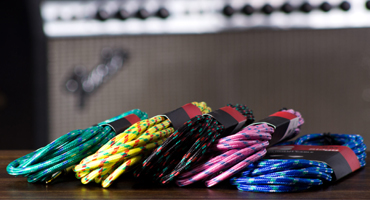
Plug any end of the cable into the output of the guitar. Location for
this varies by model of guitar, but is usually on the lower end of the
body. Plug the other end of the cable into the input of the amplifier.
Make sure that the amplifier is plugged in to a power source, and turn
the amplifier on.
|
|
Read more...
|
|
|
|
<< Start < Prev 1 2 3 Next > End >>
|
| Results 1 - 13 of 29 |